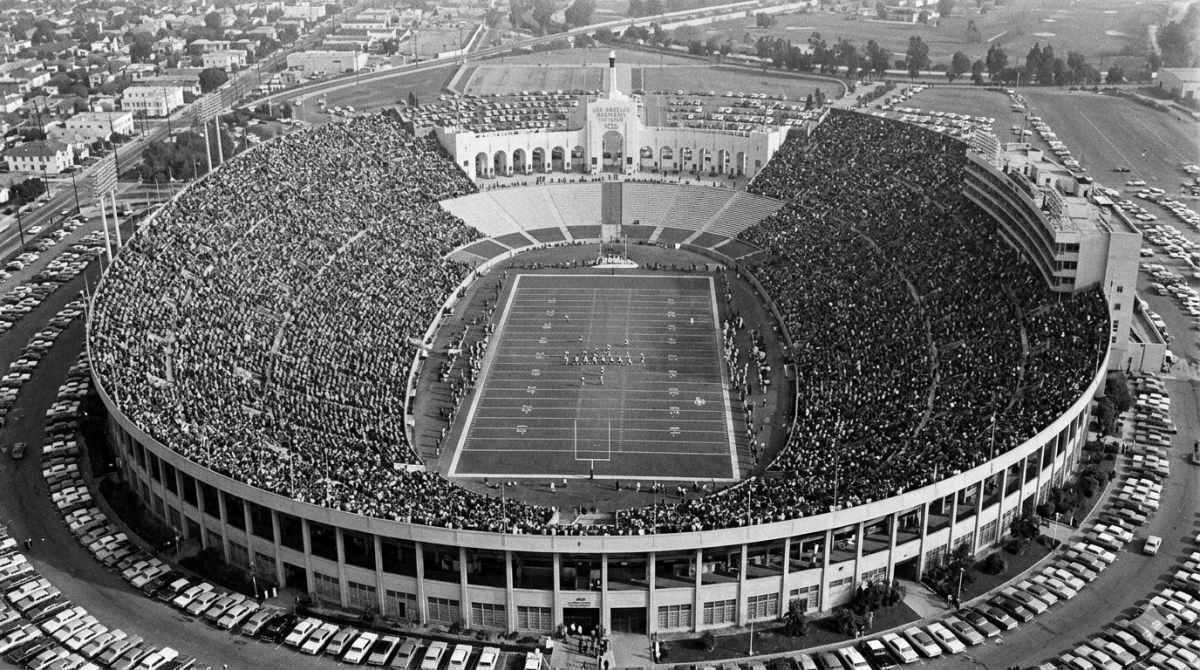

The running back used to be the star position on the football field. The most valued player on almost every team was the running back. However, things have changed in the late 2000s. As passing became more common, the value of the running back plummeted. The actual history of why this happened, however, is even more intriguing.

From the very start of the sport, the running back was the most used player by far. Up until the late 2000s, college and NFL teams ran the football more than they passed. The best college running backs would be drafted very high in the next year’s draft. In most cases, the team revolved around the running back. However, a big trade in the late 80s changed everything.
In 1989, the Dallas Cowboys traded star running back Hershel Walker to the Minnesota Vikings. However, the Vikings gave away an astronomical amount of draft picks and players. The Cowboys received Jesse Solomon, David Howard, Alex Stewart, Darrin Nelson, and Issiac Holt. They also received 1st-, 2nd-, and 6th-rounders for 1990, plus 2nd- and 3rd-rounders for 1991. However, the biggest part of the deal came with a twist. Many of the traded players came with conditional draft picks. If Dallas cut them, they would receive even more draft picks. The Vikings, on the other hand, got absolutely robbed. Along with Walker, they got a 1990 third-round pick, a 1991 third-round pick, and a 1990 10th-round pick. Walker was a disaster. In three seasons with Minnesota, he never reached above 900 rushing yards. The trade also destroyed Minnesota’s long-term roster. They had very few draft picks to refresh their roster, and recovery took a very long time.
This marked a turning point in the view of running backs. Football teams across the country realized that getting a superstar running back did not mean instant success. Even later teams realized that running backs are easily replaceable in later rounds, which caused fewer and fewer first-round running backs. Since 2010, no more than three running backs have been drafted in the first round in each draft, showing the vision of running backs being replaceable. The impact really started to get noticed in 2011, when a CBA agreement forced 4-year contracts for rookie running backs, in which they would hit free agency when most running backs start to decline in performance. In 2017, no running back had a multi-year contract over 10 million, showing how little running backs were now valued. The star running backs of today are even being low-balled. Star players like Christian McCaffrey and Saquon Barkley have gotten contracts that are very low compared to other star players.
With teams passing more, the value of the running back declines on its own, on top of the trade and CBA agreement. The more universal use of the shotgun formation and scheme changes brought a faster-paced game. As this scheme was integrated into most NFL teams, the run game was seen as an alternative instead of part of the game plan. However, we have seen a spark of life in running backs’ play. In 2024, Barkley ran for over 2000 yards (though the extra regular-season game helped). But it saw a trend in more running, though it will never go back to the level it was back then, we could see more balanced attacks in the near future.