The nursing shortage has been going on for many years now. The U.S. Bureau of Labor Statistics projects more than 193,000 registered nurse openings per year through 2036. This shows the high demand and turnover that is found within the workforce. A shortage of nursing school faculty also puts strain on the nursing workforce. U.S. nursing programs turned away nearly 66,000 qualified applications, not applicants, from baccalaureate and graduate nursing programs in 2023 due to insufficient numbers of faculty, clinical sites, classroom space, and clinical preceptors, as well as budget constraints.
The pandemic was an amplifier of the shortage and nurses leaving the profession. In March of 2022, the American Nurses Association released that 52% of nurses considered leaving their current position due to insufficient staffing, work negatively impacting their health and well-being, and inability to deliver quality care. In addition, 60% of acute care nurses report feeling burnt out. Overall, nurses feel overworked, understaffed, and burnt out in the workplace, and measures have to be put in place for them to feel safe and needed in the profession.
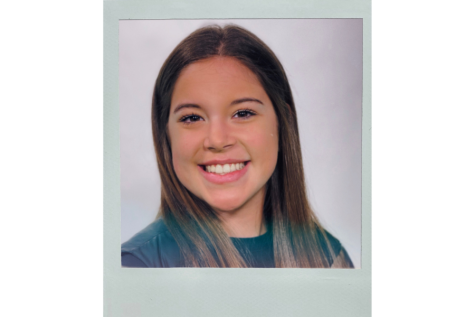
My sister and former LeSabre journalist, Kelsi Linn, started her nursing assistant job soon after high school graduation in June of 2022.
She worked full-time through the summer and applied to St. Cloud State Univesity and the College of Saint Benedict. She was accepted to both and formally accepted St. Cloud State’s offer. She then started her prerequisites to get into the SCSU nursing program.
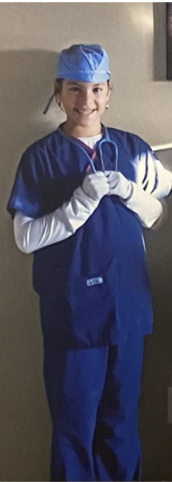
Since she was young, she knew she wanted to be in the medical field. She first wanted to be a doctor, then a surgeon, and then a Physician’s Assistant, and lastly a registered nurse. She has always wanted to be a mom and have a family, and felt that becoming a nurse would give her the most time with future children.
An entrance exam is taken before acceptance into the SCSU nursing program, called HESI or TEAS. She took the HESI to get into the program. All prerequisites have to be completed as well to be accepted with a C or higher. There are two years of prerequisites and two years of nursing school in a baccalaureate or RN, BSN program.
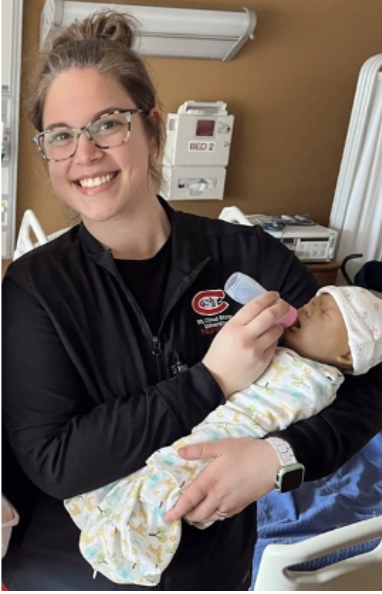
She is now in her fifth and last semester of nursing school. She has completed over 800 clinical hours and even more theory or class hours. She completed these clinical hours at many different sites, like St. Cloud Hospital, the VA, Onamia, Home Care, and others. This is more time than multiple other nursing schools around the state. She completed an optional internship between her fourth and fifth semesters in the Birth Center at St. Cloud Hospital. This semester she is completing her capstone in the Birth Center at SCH.
After college graduation she will receive her Bachelor of Science in Nursing or BSN. She will then take the National Council Licensure Examination (NCLEX), and after passing this exam, she will officially become a registered nurse in Minnesota. She officially accepted a position on the Birth Center at SCH and will be starting after passing the NCLEX exam.